Fountain of Youth Fountain of Youth
Fountain of Youth
Fountain of Youth Fountain of Youth

History of the Fountain of Youth

The Fountain of Youth Archeological Park is a 15 acre, Historical attraction in St. Augustine, Florida.
Open daily from 9:00 a.m. to 5:00 p.m.   We are closed on Christmas day.

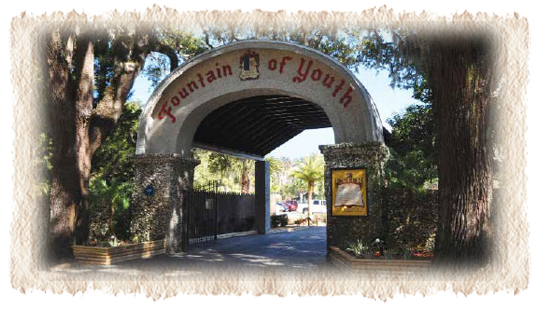
When you enter our site at 11 Magnolia Avenue, you will pass beneath the archway of this world famous attraction, you are stepping onto the very property on which U.S. history began.

Seloy was the name of the Timucua Village, before the arrival of the Spanish in 1513, and with Ponce de Leon’s claim of possession for the Spanish King, La Florida was born. No Spanish attempts that came later to colonize were successful…until the arrival of Don Pedro Menendez de Aviles on September 8, 1565. It is within the boundaries of this property that the oldest continuously occupied European settlement within our continental United States was formed – St. Augustine.

Over the next 350 years the property was farmed and citrus orchards grew here until 1901 and with the arrival of Diamond Lil’, Dr. Louella Day McConnell, who traveled here from the Klondike and purchased the estate. Being a bright and enterprising woman of the day, she began to charge an admission price to drink from the waters of the free flowing spring found on the property.

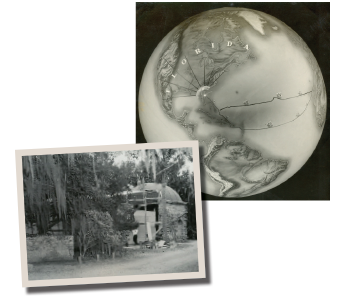
Over the last 100 years, many thousands of guests have visited in order to sip the world famous waters and hear the history behind its legendary benefits. Of course while here, you may also visit our Discovery Globe, Navigator’s Planetarium, Indian Burial Grounds, and Shipwreck Exhibit.

Don’t forget to feed the peacocks and squirrels, and feel free to bring your own lunch and use our picnic area. Our ample parking is free and we are a pet friendly attraction.

Contact us if you are interested in holding your wedding, birthday party, or special event at Ponce de Leon’s world famous Fountain of Youth.

Founding of St. Augustine
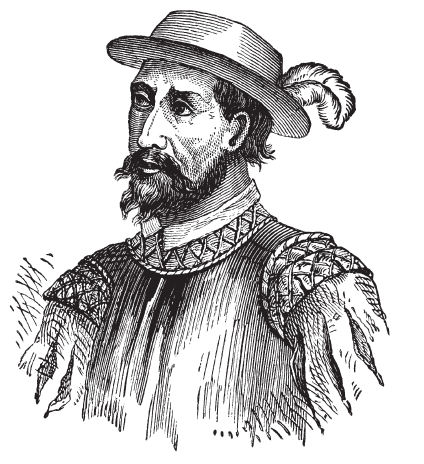
Don Juan Ponce de Leon arrived in America with Columbus on his second voyage, 1493. Leon and his fellows, not Columbus, completed Spain's claim to the New World. Made governor of Puerto Rico in 1509 and later deposed, Ponce de Leon, at his own expense, equipped an expedition to the North in 1513. A few years previous, Amerigo Vespucci had discovered and claimed the South American continent for Spain. Two of the mightiest nations in the world stood opposed for proprietorship of half the globe. Ponce De Leon heard Indians tell of Bimini, a fabulous island in the North. Historians do not unanimously honor at full value the beautifully romantic story that Ponce was seeking to find the fountain of youth. Yet it was not incredible to men in that age- when the very existence of a New World was hardly believable to those who had not seen it with their own eyes - that those who had touched these shores should believe in greater magic in this strange realm. And certainly there is no legend more appropriate to the beginning of America than that this new land should offer men a vision of eternal youth. Indeed it has! With his able navigator, Anton Alaminos, Ponce sailed and charted the ocean's main artery, the Gulf Stream, shaping the destiny of oceanic transport for all time to come.

Spanish Claim to Florida
The Fountain of Youth National Archaeological Park in St. Augustine is the site where Spanish conquistadors first came ashore in what is now the continental United States. On April 3, 1513, in the season of "Pascua Florida" - as Easter Season is known in Spanish (meaning Feast of Flowers) - Ponce de Leon's expedition sighted land in the present vicinity of St. Augustine and named it La Florida. When they landed, the priest who had accompanied the soldiers said a Mass of thanksgiving as the native Timucua Indians looked on. Ponce de Leon took possession of the continent for Spain. In later years pioneering Spaniards came to know St. Augustine Inlet as Barra de la Florida although there is no direct evidence that Ponce de Leon himself gave the inlet this name. With the landing of Ponce de Leon, Spanish claim to Florida was established. Spain was thus set squarely against England on this continent. Ponce de Leon's claim in effect, covered all of America from Florida to Labrador, from coast to coast. And enforcement of that claim during the three centuries to follow has indelibly marked the geography, religious history and even the "native" customs of the nation we know and love today as the United States of America. The most vivid references to this early Spanish history will not be found in books - only in the historic landmarks you can see in St. Augustine today.

Important Archaeological Discoveries
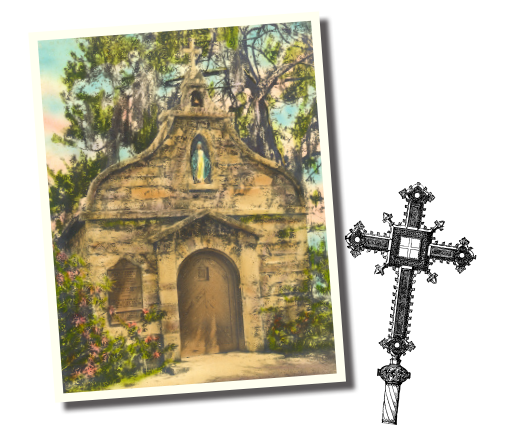
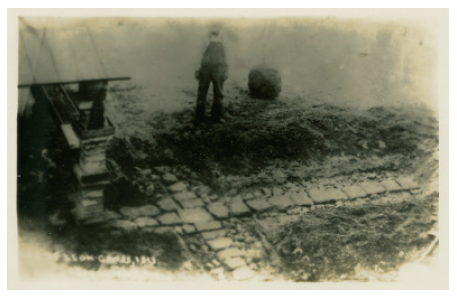
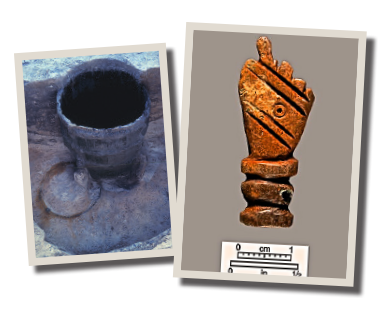
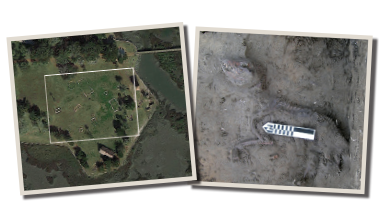
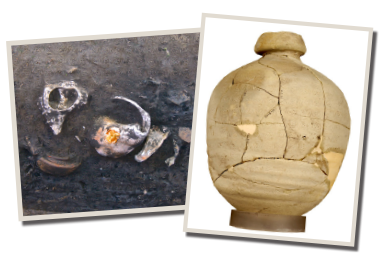
The major archaeological discoveries at the Fountain of Youth are indicated on the yellow map visitors receive when they enter the park. Aside from the stone cross and salt cellar which are housed in the spring house, five other areas of importance are listed:

1. Ponce de Leon's recording landmark and accompanying artifacts
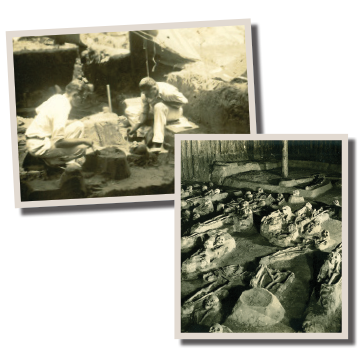
2. First Christian Indian burials in North America with Mission Period interments
3. Timucua Indian hut foundations and relics
4. Artifacts indicating Timucua habitation for more than 1,000 years prior to Ponce de Leon's arrival
5. Evidence that Pedro Menendez's colony occupied the site during the 16th century.

Modern Day Excavations
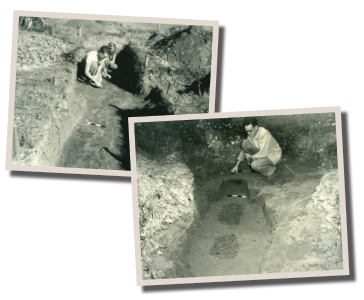
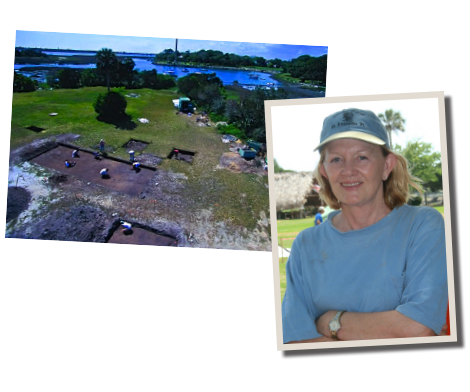
The Fountain of Youth Park has been the site of many exciting archaeological discoveries of national historic importance. New archaeological excavations are intermittently underway with funding provided by the State of Florida, the Fountain of Youth, and Flagler College. The project, directed by Dr. Kathleen Deagan, renowned Florida archaeologist from the University of Florida, is a search for the foundation of the first wooden fort built by the Spanish and the first Catholic mission constructed on the site. As developments unfold, they will be announced to the public.

Timeline of one thousand years of St. Augustine History
As the year 2000 passed, a strong interest in the history of the old millennium surfaced. To satisfy your craving to dig into the past, we present an abbreviated time line of the last ten centuries in the St. Augustine area.

* 1000 A.D. Northeast Florida's native inhabitants organize themselves into large communities with complex social systems and sophisticated political ties. The cultivation of corn, squash, pumpkin and beans develops. Pottery becomes more decorative. Skilled hunters, the natives are masters of the bow and arrow.
* 1100 A.D. Native people settle along the St. Johns River and the lagoons and estuaries of the east coast where they find abundant shellfish, river fish and wild game. A migratory lifestyle gives way to villages and ceremonial centers.
* 1200 A.D. Villagers become accomplished fishermen, venturing in dugout canoes to deep ocean waters to catch shark with baited bone hooks. At high tide they stretch a net across the mouth of the channel. Low tide allows them to easily gather the large fish trapped behind.
* 1300 A.D. Shell mounds increase along the river basin and on the east coast, as communities can now sustain growing populations where food is plentiful. Intricate shell carving decorates farming implements, hunting tools, drinking and cooking vessels.
* 1400 A.D. After centuries in Northeast Florida, native inhabitants are well adapted, having mastered life in the environment. They live, farm and hunt along the waterways in large, stable villages and towns. Trade with nearby groups increases. Political alliances of mutual benefit are forged. Medical knowledge rivals or is superior to that known in Europe.

1500 A.D. - 1600 A.D.
* 1513 - Juan Ponce de Leon sails along the Atlantic coast in search of the fabled fountain of youth. He comes ashore somewhere in the vicinity and claims the continent for Spain.
* 1565 - Pedro Menendez de Aviles is commissioned by the King of Spain to dispatch the Frenchmen who have built a fort at the mouth of the St. Johns River. Menendez establishes St. Augustine, then marches 40 miles with 500 men in a hurricane to surprise the French.
* 1586 - Sir Francis Drake, returning from his trip around the world, stumbles across St. Augustine and decides to sack and burn the town. The struggling colonists rebuild the city.

1600 A.D. - 1700 A.D.
* 1607 - The English establish a colony at Jamestown. Piracy becomes a way of life in the New World for unemployed soldiers and mariners. St. Augustine gains a reputation as a no man's land where recalcitrant priests, insubordinate soldiers and those with criminal records are sent in exile.
* 1660s - Smallpox, yellow fever and measles come to Florida, decimating the native population. English pirates attack the town once again, but the small wooden fort is not captured.
* 1672 - Realizing the vulnerability of St. Augustine, the Spanish Crown approves construction of the massive fort Castillo de San Marcos. Slabs of coquina are ferried across the bay. Completed in 1695, the fort has never been captured in battle.

1700 A.D.- 1800 A.D.
* 1702 - The English invade, destroying Indian settlements and besieging the town. The new fort is put to the test as the entire population of St. Augustine takes refuge within its walls for almost two months. Once again the town is burned to the ground.
* 1730s - The first free black settlement is established at Fort Mose.
* 1740s - General Olgethorpe leads another English attack on St. Augustine -- unsuccessfully. The Spanish repel five attempts by the English to land at Fort Matanzas and Anastasia Island.
* 1763 - Two centuries of Spanish rule comes to an end as the Treaty of Paris grants St. Augustine to England in exchange for returning Havana to Spain.
* 1776 - War breaks out between the colonists and the English Crown as the united colonies declare their independence. St. Augustine remains loyal to the king. Several signers of the declaration are imprisoned at the fort.
* 1783 - The Treaty of Paris restores Florida to Spain. Many citizens return to St. Augustine from Havana and Mexico City.

1800 A.D. - 1900 A.D.
* 1803 - With the Louisiana Purchase, the United States believes it has a claim to West Florida. Seven years later it occupies the area. 1819 - Spain cedes Florida to the United States.
* 1821 - Florida becomes a territory of the United States. Migration begins from the North as settlers come seeking land and opportunity.
* 1835-1842 - St. Augustine is besieged by epidemics of yellow fever. The Seminole Indian Wars make settlers living on farms and plantations in outlying areas flock to the town for protection.
* 1845 - Florida becomes a state.
* 1861 - Florida joins with the Confederacy in the War Between the States. The following year Union troops enter St. Augustine and occupy the town for the duration of the war.
* 1875 - Members of several Plains Indians tribes are captured and relocated to St. Augustine where they were imprisoned at the fort.
* 1880s - St. Augustine enjoys an improved economy as northerners looking to escape the winter's cold head south for an extended vacation season. Henry Flagler, a multi-millionaire, begins to transform St. Augustine into the American Riviera by building resort hotels and the Florida East Coast Railway.

1900 A.D. - 2000 A.D.
* 1910s - Sportsmen, adventurers and daredevils make St. Augustine a destination to display their wild achievements. Horseless carriages race along the white sand beaches. Ladies play golf on the Fort Green. Aeroplaning becomes popular.
* 1924 - By presidential proclamation the castillo, the city gates and Fort Matanzas are declared national monuments.
* 1936 - St. Augustine embarks on a journey of restoration and preservation of the city's heritage buildings.
* 1989 - The Archaeological Preservation Ordinance is passed requiring archaeological investigations to precede any construction in historically sensitive areas.
* 1990s - A modern city with a proud past, St. Augustine is poised to greet the new century with the same steadfast determination possessed by the early colonists.
* 2000 A.D. and beyond - Striving to balance the needs of the new with the importance of the old is the greatest challenge the town faces as the new millennium arrives. May all our decisions be wise ones.


Ponce de Leon's Fountain of Youth
11 Magnolia Avenue
St. Augustine, Florida 32084
1-800-356-8222
Tel (904) 829-3168
Fax (904) 826-1913
Email: fountain@aug.com